A Reflection on Creating my Final Video Presentation

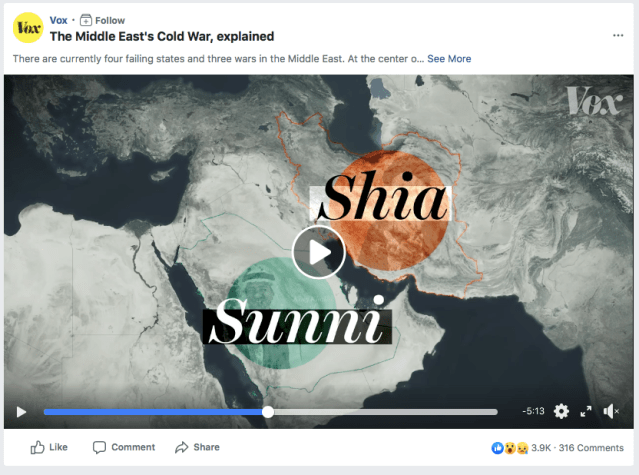
Vox’s 10 minute clip on the Cold War in the Middle East.

A Growing Appreciation for Documentaries

I have always loved documentaries (see my previous post about television consumption). My Netflix queue suggests “Docs & Reality TV,” “Documentaries,” and “Docu Series” based on my consistent viewing habits. Watching documentary films makes me feel as though I am uncovering something about the world in a productive manner while simultaneously being entertained. When I watch documentaries, it is one of the rare times where the TV has my full attention, unlike with sitcoms where I tend to scroll through Instagram while I watch. So while I have always had an interest in these types of films, it was not until recently, that I gained an appreciation for them.

This past summer I had the pleasure of interning at the PBS documentary company FRONTLINE, in Brighton, MA. My title was the Social Media/Audience Development intern. I spent the summer combing through the latest documentaries to pull quotes for social media graphics and find people to promote our content. Through this process I got to see a high-level documentary film at every stage and watch it undergo various edits, adjustments, and formats until it was ready for broadcasting/streaming. During the summer, I got to see the amount of hands that go into creating a 50 minute documentary. I never doubted the skills, precision, and analytical thinking required to make these films, but our final video project for Professor Webb’s class gave me a whole new appreciation for film production.
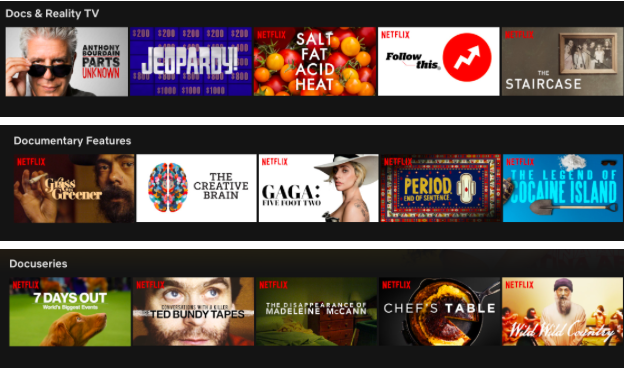
My Netflix queue. Interesting to note the multiplicity in the types of categorization that exists for documentaries in general.

What changes would I make to my video?

Given my background in and growing understanding of social media and audience development, one change I would make to my final video is its packaging. As an 8-minute long video, our project would be more suited for YouTube or social media as opposed to a television streaming platform. For a video to do well on social media and circulate widely, it needs to be packaged distinctly. Brand recognition is essential in making clips stand out amidst the deluge of videos that are posted every day to various platforms. I watch a lot of short docu-series on Netflix and, as a result, follow many of these media companies who create Netflix content on Facebook and Twitter.

A personal favorite of mine, is the media company Vox, whose tagline is “Understand the News.” Their mission to make current events palatable makes their news and short clips highly accessible and recognizable through articles and videos that are usually under ten minutes long. Our video follows a similar format, however the graphics used for Vox’s shorts make it highly recognizable. They use distinct fonts, on-screen transitions, and coloration to make all their videos appear authentically Vox. This is not unique to this media conglomerate, Vice, CNN, BuzzFeed, and more, all use branding tactics to make their videos stand out in a feed as well as promote instantaneous brand recognition.  

If I were to re-do this project, I would focus on drawing a distinct line throughout my film to make it more unique, as opposed to a patchwork of video clips that we pulled from the web. This video from Vox is one of my favorites. It explains the Cold War in the Middle East and combines various types of framework to deliver its information. It combines graphics, interviews, and clips to teach its audience about this occurrence in the Middle East. In my video, one of the most rewarding parts for me was creating my own graphics. Though at the amateur level, I used Snapz, a screen-recording application to record myself scrolling through a government document that I highlighted myself. Additionally, I created graphics where I combined a few news headlines that discussed censorship in Turkey and Morocco. This part was rewarding for me as I felt that I was not just pulling stuff from the internet, I was curating my images to fit our specific vision.

Creating a video on current events or the politics of a region, like we did, is incredibly difficult as you must balance the appropriate amount of background knowledge needed to make the video accessible. Our group balanced this well, and were also able to make the clip about 8 minutes, making it easily accessible.

Throughout this process, I’ve gained a greater appreciation for these docu-films, whether they are fifty minutes or 10 minutes long, as well as an understanding of information deliverance and what makes a clip accessible or inaccessible.

In the News

In the News

Mansur Yavaş, CHP, new mayor of Ankara.

On March 31st, 2019, the CHP party (the Republican People’s Party) won local elections in Ankara and Istanbul, ending the 25 year reign of the AKP (Prime Minister Erdogan’s ruling party). Mansur Yavaş is the CHP party’s candidate and the new mayor of Ankara. Yavaş has previously served in the city government for a sporadic two years. During that time, misconduct allegations arose from his time working as a lawyer. Ankara governmental officials attempted to resurface these allegations of fraud before the elections took place. These allegations represent the AKP’s fear of losing the capital city to Yavaş. The fraud and misconduct allegations, to Yavaş and many others from outside of the AKP, are means of attempting to maintain a stronghold over Ankara and Istanbul, arguably the two most important cities to Turkey.

Attempts to Maintain Control

The allegations posed against Mansur Yavaş are not the only attempts by the AKP to maintain power in the wake of the CHP’s win. On Sunday,  April 22nd, 2019, Kemal Kilicdaroglu, CHP leader, was attacked while attending the funeral of a soldier killed fighting Kurdish fighters in the southeast. Al Jazeera reports that “The attack came days after the main opposition CHP won Ankara and Istanbul from President Recep Tayyip Erdogan‘s Justice and Development (AK) Party on March 31 local elections in a stinging blow to the ruling party.” While a political victory, the the CHP is facing violent backlash against their success as a result of the polarized political climate and resistance to change over.

Impact on Social Media

What will come of this trending topic in Turkey? How will the government choose to dialogue with this viral video?

Kemal Kilicdaroglu is 70 years of age. He was attacked in the street and beaten brutally. Currently on social media, the hashtag #KilicdarogluYalnizDegildir, which means “Kilicdaroglu is not alone,” is trending. The immediacy of social media is palpable as this attack went viral via cell phone video immediately after it happened. As Turkey has a complex relationship with Twitter, and often censors much content, if not the whole website, it will be exremely interesting to follow how the Turkish government, with the AKP party currently ruiling, responds to this virality. Stay tuned.

Media and Counterterrorism: Reflecting on 9/11 and Hate Speech in the Media


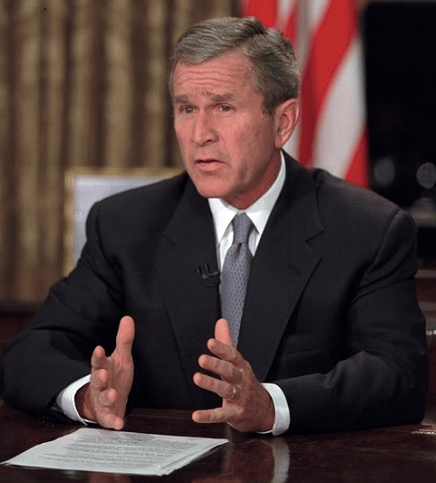
President Bush’s televised address to the nation after 9/11.
Television address to Twitter. What holds more weight?

In class on Thursday, we discussed the role of the United States’ government in counterterrorism communications. To understand how the United States creates messaging for counterterrorism, it is first important to understand how the United States first communicates about terrorism in the media. Because media in the U.S. intrinsically links religion and terrorism (when it pertains to Islam), it is also important to note how the media discusses. How did we once discuss terrorism on television? How do we now discuss terrorism on Twitter?

President Bush’s Television Addresses On and After 9/11

After the attacks on the World Trade center, president George W. Bush used television and radio to address the nation. The use of these two main media forms has been a common tactic for presidents to speak to the nation after a tragic event has occurred. The attacks on the World Trade Center happened September 11th, 2001. During this time, the age of the internet was just coming into popularity, but the majority of US citizens turned to television news to receive their information. President Bush’s address immediately following the attacks spoke of America’s braveness, addressed the feelings of anger, confusion, and fear civilians might face, and eulogized the emergency personnel who lost their lives fighting for others’. On September 17th, 2001, President Bush visited the Islamic Center in Washington D.C. and delivered a speech entitled “Islam is Peace.” This speech speaks directly against those who were quantifying all Muslim people as terrorists in the face of the associations that were occurring between Islam and terrorist extremism. He states in his speech: “Both Americans and Muslim friends and citizens, tax-paying citizens, and Muslims in nations were just appalled and could not believe what we saw on our TV screens.” His television address directly combatted television reports drawing these connections and spreading and inciting hate speech about Islam after the attacks. Pre-dating our Twitter-sphere, the television address was the main form of wide-spread direct contact between citizens and the President.

A Meditation of the Resurface of Bush’s Speech

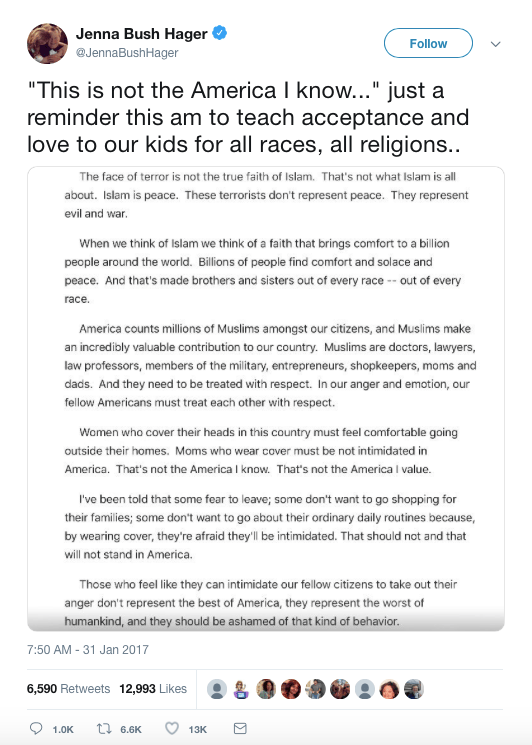
President Bush’s speech condemning hatred for Islam resurfaced on Twitter by Jenna Bush.

In 2017, six years after the September 11 attacks, Bush’s address from the Islamic Center in D.C. was re-circulated via Twitter. Before Twitter, a televised presidential address stood out in the clutter of the media. Since its popularization, television was an essential media tool for speaking directly to a country. Now, with the accessibility of social media, presidents have the ability to speak directly to the people much more easily and quickly. However, Twitter lacks intentionality and the idea of a presidential address as an event that occurs when during a televised press release. Twitter declarations like those Trump shared after inciting a travel ban on Syrian refugees, is more easily circulated and quicker than a Television address. Through Twitter Islamophobia becomes more integrated into media cycles. The resurface of Bush’s televised address transformed into Tweet format speaks volumes to the changing media climate and what people listen to when it comes to rhetoric about counterterrorism. This Tweet has made me wonder: How has Twitter has changed the way we speak about terrorism, counterterrorism, and hate crimes?

Reflecting on the Gezi Park Protests

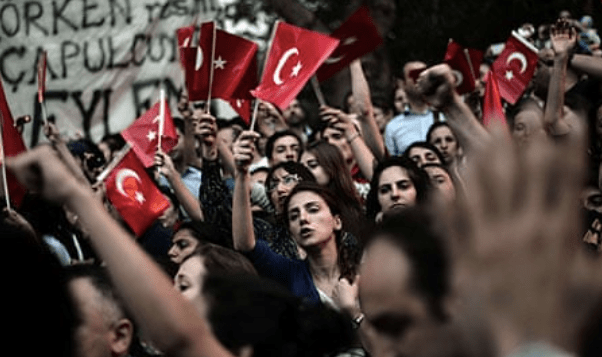
The Gezi Park Protests (source)

In understanding the current media climate in Turkey, it is essential to look not only at the strategic economic and political choices to control media throughout Turkey, but to also understand how one uprising further contributed to the stronghold over the media and social media in Turkey. Throughout my posts I have discussed many ways in which the government censors media, but I have not yet touched on this pivotal moment in media history for Turkey. The Gezi Park Protests contributed to the continuous descent into total control over media in Turkey over the past seven years.

What were the Gezi Park Protests?

May 27, 2013, in Taksim Square, Istanbul, environmentalists gathered to peacefully protest the bulldozing and destruction of the park for capitalist development. The demonstration was broadcasted on social media, creating a public stage for the protest itself. The Turkish authorities responded by unleashing tear gas on the crowd of protesters, siting this protest as a demonstration of anti-government (a trope that is used in censorship in media as well). Brutal force was used to stop the original protest and as social media captured the police violence against civilians, more civilians joined in order to protest the government’s treatment of the original protesters.

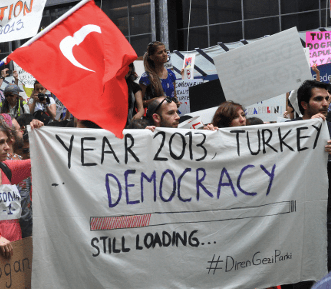
The Gezi Protests turned from environmental protests to fights over media control and democracy.

How did the media play a role in the Gezi Park Protests?

The use of social media was essential in circulating information about the Gezi Park protests. It was a photograph of a woman being attacked with pepper spray by a policeman that became the keystone of the protest and that ignited emotion and a need to resist across the country.

In the midst of the violence and police brutality, the Turkish government “condemned social media sites such as Twitter and Facebook that were being used to convey messages by protestors and their supporters.” For the Turkish government, social media became the scapegoat for the protests and was the reason the brutality occurred. Simultaneously and somewhat contradictory, social media aided the public in revealing the atrocities committed by the government.

The impact on social media:

Social media has since become a target for the Turkish government. Twitter has become a partner to authoritarian regimes. Twitter as an entity has infrastructure allows for censorship and values government officials higher than regular people, illuminating that Twitter is not egalitarian in the hands of a a regime leader. Furthermore, Turkey’s government “later made a statement that it would require Twitter to open an office in Turkey and require it to cooperate on “universal crimes” including defamation. Government made further statements regarding [unspecified] plans to introduce a law to regulate social media and require cooperation to combat ‘defamation.’”

The Gezi Park riots illuminated the power of social media in civilian uprisings. Media regulation and anti-defamation laws have fallen into place in order to further suppress any anti-state rhetoric or actions.

In Response to Expelled German Journalists

Read the Time article here

Jörg Brase and Thomas Seibert, the expelled reporter from Tagesspiegel, the German publication.

On Sunday March 10th, 2019, two German journalists left Ankara, Turkey’s capital, after not receiving accreditation for their work. The journalists, Jörg Brase and Thomas Seibert had their request for press cards denied and then were forced to leave Turkey within ten days of their rejection. This rejection for press cards marks one of the rare instances where Turkey seeks to directly censor foreign journalists in Turkey. While censorship in Turkey of Turkish journalists is rampant, this expulsion illustrates one of the first attacks on international media (time magazine citation). The expulsion of these two journalists could be the start of a trend to eliminate the threat of international media systems, especially given the revolutionary power and history of Tagesspiegel, the German newspaper.

Tagesspiegel newspaper has international power and strong ties to the United States making it currently a highly powerful publication as well as a publication rooted in Germany’s own radial history. The publication’s headquarters are in Berlin. It is the third most subscribed-to paper, and it “describes itself as the capital’s most quoted newspaper.” It has correspondent offices located in Washington D.C., connecting the publication heavily with the United States. For these international connections, I speculate that this is why these two journalists were targeted as some of the first international journalists in Turkey.

The expulsion of these journalists has already sparked a travel advisory by the German foreign ministry stating that: “there was a risk that the Turkish government could ‘take further measures against representatives of the German media or civil society institutions.’” Always a risk for Turkish journalists, this expulsion further threatens the media climate in an already censored country. The reactionary travel advisory, while functioning to protect German journalists, can act as fuel to the Turkish government as they see their actions to censor international media are working in their favor to further isolate and insulate Turkish media.

TV Watching Habits in 2019

TV watching is no longer limited to watching in your family’s living room.

Television viewership has drastically changed since color TV was first invented and installed in homes across the U.S. in the 1950s. Rapid change in how people view television has occurred even more so in the last two decades with the emergence of social media and streaming platforms. Research studies and cultural examinations beginning in the mid 2010s have named the phenomena of viewing television combined with active participation on social media/the internet on a second electronic advice “second screen theory.” Appointment viewership is a fading phenomena and TV producers and corporations understand and therefore are capitalizing on audiences’ divided attention. Read more about second screen theory, how it works to increase viewership, and its other effects in this journal article by Rebecca Coates Nee and David Dozier.

The second-screen phenomenon examines how people watch TV with a second screen near them.

For my family and I, we no longer have cable TV in our house. My parents chose to eliminate cable for a multitude of reasons: my dad stated that he was “sick of being held captive by Comcast [our cable, internet, and for a long time, our telephone], new technologies are way better.” He compared cable to having a landline and stated that all the physical devices needed to watch cable television was too much clutter. There is also a sentiment that cable is old-fashioned and unable to keep up with changing technologies, as all members of our family mainly watch TV on their phones, tablets, or laptops via streaming services. Instead of cable, my family has Netflix, Amazon Prime, and YouTube TV in order to watch sports and live news shows. Of the three friends I interviewed, one of their families had also “cut the cord” on cable.

Personally, I watch Netflix at school to unwind before bed. When at school I tend to watch light-hearted comedies or shorter Netflix documentary series by BuzzFeed or Vox. I recently have been watching the CNN history series on the decades on Netflix and would recommend watching the episodes on television within each decade to understand the evolution of not only viewing habits for TV but the evolution of television content as well.

While at home I watch Netflix or YouTube TV on my computer or in my living room and tend to watch TV shows that are more dramatic or engaging like American Crime Story: The Assassination of Gianni Versace, The Marvelous Ms. Maisel, and You. I poled my roommates on their viewing habits and we all have similar viewing patterns. My three roommates watch The Bachelor and Survivor altogether and with other people on someone’s computer when the new episodes come out on streaming platforms. Each of my roomates tended to watch TV for an average of 1 hr/day. One of my friends, Caroline, is involved in iMessage group chats to discuss Survivor and even participates in a fantasy bracket for the show. Sarah stated: “I never watch live TV” and prefers to watch older shows like Sex and the City or Parks and Recreation. She watches TV for the distraction and likes comedy series for that reason. She stated that she will be on her phone while watching TV but rarely engages in second screen interactive viewership.

Censorship in Turkey

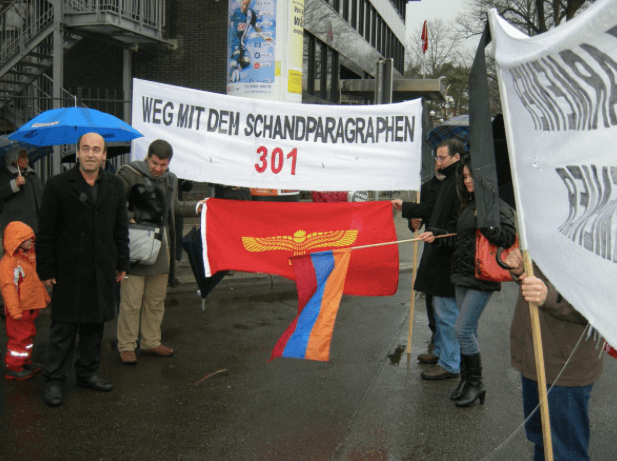
Article 301 is the penal code in the Turkish Constitution that makes it illegal to insult Turkishness. Article 301 is cited frequently when indicting journalists and closely links their work to terrorism.

In Turkey, the judiciary and government have the power to censor journalists. Censorship in Turkey is carried out in all three ways that we discussed in class: pre-censorship, post-censorship, and self-censorship.

One method of post-censorship is imprisonment. Imprisonment for journalists in Turkey is a long process. The imprisonment process is intentionally slow to further intimidate journalists and guarantee censorship. An article from Reporters Without Borders articulates the methods that Turkey needs to take in order to lower the amount of journalists who are wrongfully imprisoned. One recommendation directly speaks to the unfair lengthy indictment process:

“(2.) The judiciary in Turkey must require public prosecutors to produce indictments in a timely manner, especially in cases where the defendant is held in pretrial detention. Evidence in indictments against journalists must be required to be proven beyond reasonable doubt of criminal activity.”

Various government institutions throughout Turkey censor journalism on anti-state or terrorist charges. Journalists who write pro-Kurdish materia, question the government, Prime Minister Recep Tayyip Erdoğan, military, are all considered guilty of terrorism, anti-state actions, or insulting Turkishness.

Many journalists have also been jailed due to speculation that they are linked with the Ergenekon conspiracy. The Ergenekon conspiracy is a “vast plot aimed at overthrowing the government through a military coup.” It is believe that journalists use their medium to spread fake news stories to create chaos within society to make a military coup possible. Ahmet Şık and Nedim Şener were two reporters who were accused of working for the Ergenekon plot. Instead, Şık was writing about the influence of the Islamic Fethullah Gulen movement, an outlawed ideology that calls for a civil society through universal education and the spread of peace. This charge is a direct example of post-censorship: the government is using their power and legitimacy to open an investigation and eventually prosecute these reporters due to the subject of their reporting. The Islamic Fethullah Gulen movement is illegal in Turkey, so to report on it would fall on the grounds of anti-state actions and possibly terrorism as this institution may threaten the Turkish government.

Sources:

https://cpj.org/reports/2012/10/turkeys-press-freedom-crisis-summary.php

https://cpj.org/reports/2012/10/turkeys-press-freedom-crisis-summary.php

What Should Be the Purpose of Journalism?

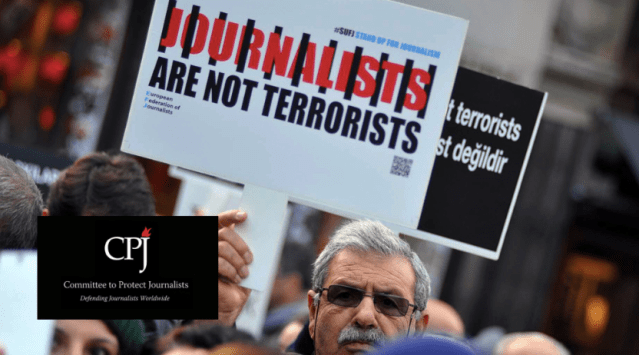
Image from the CPJ website of citizens protesting the jailing of terrorists in Istanbul, Turkey.

Journalism, reporter, correspondant are all terms often used interchangeably for a similar job title. To better draw my own personal conclusion on what the purpose of journalism should be, I wanted to educate myself on what the literal definition of journalism is. I turned to Google to find out some more information and came across a video from PBS meant for elementary schoolers to explain to them what the definition of journalism is and what journalists really do. Although meant for young kids, this clip interviews a multitude of journalists and they explain in plain terms what they think their job means. You can watch the video here.

Here are some highlight quotes from the clip that explains what journalism is:

  • Journalism “keeps us informed about what is happening in our communities.”
  • Journalists give “highlights… distilling to them what the most important story was.”
  • Journalists “[have] access to people and places that the general public does not.”
  • Journalists are “the eyes and ears of the community.”
  • “Without journalists…people in the community cannot make good, sound decisions on… how they want their society to look.”
  • Journalists “hold people accountable.”

These definitions begin to chip away at the purpose of journalism. The PBS video in conjunction with the mission statement of CPJ, the Committee to Protect Journalists, and “Journalist as Change Agent — Government repression, corporate feudalism and the evolving mission of Arab journalism” by Lawrence Pintak reading for class, brings me to the conclusion that the purpose of journalism is to disseminate information and educate the public. However, to fully gage the purpose of journalism, the question needs to be answered of what is the relationship between reporting and advocacy.

The CPJ articulates the importance of citizen journalists in times of staunch pre and post censorship. The organization sites that after the 2011 Arab Uprisings, journalists were attacked more frequently and more brutally in Egypt. This resulted in an emphasis on the importance on citizen journalists to provide raw material and footage in these times of social and political strife. Overall, CJP sites that the Arab uprisings caused a surge in social media because journalists could not, and still cannot, report without facing the consequences of censorship; the result is self-censorship.
In Turkey, staunch identity politics and the pervasive necessity to preserve the image of the Turk causes great self censorship. As articulated in an article in this article in the Atlantic, Turkey’s president, “regularly vilifies journalists as ‘terrorists’ while stoking fears of terrorism among his voters. He frequently eschews facts and voices conspiracy theories, including the idea that Turkey’s allies are secretly working to undermine the country’s supposed economic might.” Calling journalists “terrorists” speaks to the great power that journalists hold, if they choose to report without self-censorship. Ranked 157th out of 180 countries on the 2018 World Press Freedom Index, one main reason for self-censorship occurs out of fear of insulting “Turkishness” that would inevitably end in legal terms. Turkey’s strong hold over the media and journalism furthers my point that journalism is used to uphold systems of democracy. Freedom of information leads to an educated society and allows for citizens to question their government. If insulting Turkishness is a crime, there is no room to question the governmental institutions and systems that in place in Turkey, something that would be catalyzed by a freedom of press.

Current Media Climate in Turkey

BBC News has a profile on media in Turkey that outlines the top press associations, television corporations, radio stations, and internet sources. These media sources differ in ownership; some are privately owned, others are owned by the state, some Islamic-centered, some Kurdish. Below is the information from BBC News’ Turkey Profile in Media. I have added my own highlights to the media sources that I will be referencing most prominently in this post.

As a semi-democratic country, situated between Europe and Asia, media in Turkey is constantly under stress as it is pulled between a freedom of press ideology and the force of government censorship. Journalists face the constant threat of imprisonment. In 2018 the Committee to Protect journalists cited Turkey as “the world’s worst jailer for journalists.” The 68 journalists imprisoned in Turkey in 2018 are all facing anti-state charges.

The Doğan Holding and Private Media

Television is the most popular media form in Turkey (BBC) and up until March 2018, the Doğan Holding was the most powerful media conglomerate in the country.  The Doğan Holding owned Hurriyet, Posta, Kanal D, and CNN Turk. The media conglomerate was often accused of being biased against the current governing party. On March 21st, 2018, the Dogan was bought by Demiroren Holding, a pro-government corporation that has its hands in everything from tourism to oil to media.

This acquisition was a long time coming for the Doğan Holding. The New York Times cites that since 2009 the company has been at odds with the government: “the company was fined $2.5 billion for unpaid taxes, a decision widely seen as an attempt by the Turkish government to punish it for its criticism of Recep Tayyip Erdogan, then the prime minister and now the president.” The owner of the company, Aydin Dogan, sold two of it’s newspapers to Demiroren in 2009, sparking the beginning of the full acquisition that occurred nine years later.

Demiroren’s ownership of the Doğan Holding’s media outlets will further limit free journalistic expression in Turkey in the media. Demiroren Holding owns all media that was previously owned by the Dogan Holding. The Istanbul-based company was founded in 1956  and is a powerful force: “it publishes newspapers; operates online news Websites and mobile applications, and an online news television, as well as Websites that provides information on sports, finance, and women; offers online real estate services; and owns and operates a high school. The company was founded in 1956 and is based in Istanbul, Turkey” (Bloomberg.com).

Other Media Sources

In addition to those owned by the Demiroren Group and other privatized media companies, TRT is the only public, state-owned broadcast media company. Previously TRT owned a monopoly on media stations that the government overturned in 1989. Now, TRT is unique because it broadcasts in Kurdish, a movement implemented by the European Union to aid Turkey in efforts of inclusivity for minorities. TRT’s mission statement explains that they: “define our audience as global citizens with a global conscience and believe they deserve to be at the heart of the story… we hope to contribute to the narrative of how stories are told and channel in new perspectives of thought. In other words, we aspire for a better informed global audience” (TRT Website).

Turkish Media Breakdown by Company and Media Type: (From BBC News)

The press

Television

Radio

  • Turkish Radio and Television (TRT) – state broadcaster, services include cultural/educational network TRT 1, popular music network TRT 3 and Turkish folk/classical music station TRT 4
  • Kral FM – popular private network
  • Super FM – popular private network

Internet

Introduction to Turkey


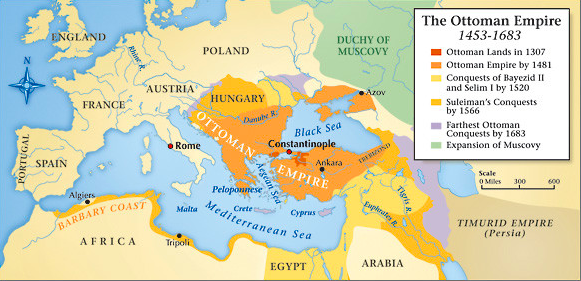
Map of the Ottoman Empire – 1435 – 1683. The red dot highlights the capital of the Empire, Constantinople, which is now Istanbul.

Brief History

What is now known as the Republic of Turkey was ruled by the Ottoman Empire from the late thirteenth century into the early twentieth century. The Ottomans captured Constantinople, which is now Istanbul, in 1453. During World War I the Ottoman Empire was on the decline. They joined the war effort with the Allied Powers and were defeated in 1918.

The Turkish National Liberation War worked to rebuild Turkey after the Empire fell. The War was won by the Turkish military and ended with the signing of the Lausanne Peace Treaty. This was considered a great diplomatic success and was signed by Great Britain, France, Greece, and Italy. This treaty created the borders of Turkey and the Republic of Turkey was created on October 29, 1923.

Introduction and Geography

Turkey functions as both a bridge and barrier between Europe and Asia. Turkey is located in the Middle East, but it borders these two geographic regions. Turkey’s location is important to its history and culture; throughout its history, there is a constant push-pull of Turkey’s identity due to its geographic location. For example, Turkish government officials have been discussing the ramifications if Turkey were to be added to the European Union.  

Metrically, Turkey is the largest territory and population in the Middle East and is larger than any country in Europe. The population is 81,257,239 as of July 2018 and the area of the country is 302,535 square miles. Turkey’s coastlines are along the Black Sea, the Aegean, and the Mediterranean with control over the Turkish straits. This position makes has highly impacted its relationship with Greece.

The capital of Turkey is Istanbul and it is the country’s most populated city. The second most populated city is the country’s capital, Ankara. Istanbul has approximately 9 million inhabitants (Source) and is the country’s main commercial center and chief port. Turkey’s population is urbanized with 75.1% of the total population living in an urban setting as of 2018. 20% of the population lives in Istanbul. Istanbul was the capital of both the Byzantine and Ottoman Empire and thus has great historical significance for the country and is relevant in shaping the identity of this quasi-European country.

Society and Culture

Throughout its history, and especially after the Republic of Turkey was established in 1923, Turkey has worked to create a strong identity for the modern Turkish people. The official language is Turkish, which is therefore the most popular language,  followed by Kurdish, and then Arabic. It is cited in the Turkish Constitution that citizens of the Republic of Turkey, hold the identity of a Turk, no matter ethnicity or original birth place.

Secularism in Turkey

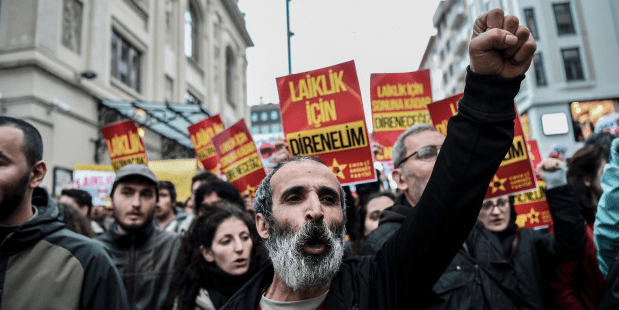
The constant debates for secularism in Turkey – and what that means.

Turkey is declared a secular country, citing that secularism is a keystone to the success of their society. However, 90% of the population identifies as Muslim. Turkey’s modern history is fraught with attempts to secularize the country but is met with constant push-back from the people who desire to express their religion. A consistent point of debate in Turkey are the limitations in place that seek to maintain secularism, despite the religious affiliations of the population. This debate is divides political parties and is ever-changing.

Turkey’s secularism works to limit religious expressions on the grounds of encouraging democracy. One example of this encouragement are the headscarf reforms. Turkey has implemented different laws to control the wearing of headscarves in public in attempts to quell outright expressions of religion.  In various institutions throughout Turkey’s history, it has been illegal for women to wear headscarves. (Read more about the headscarf bans throughout Turkey’s history here.)

To understand Turkey’s on going struggle to enforce secularism in a predominantly Islamic country, one must understand Turkey’s histroy, borders, and population. Due to it’s location, Turkey draws inspiration for its metropolitan, democratic cities from Europe. During the creation of the constitution for the new Republic of Turkey in 1923, reforms were put in place to eradicate relgious demonstrations and these reforms carry on today.

I look forward to examining the ideological connection between secularism and democracy and tracing how ideas that carried over from the Ottoman Empire function in today’s society. Throughout this blog, I will turn to Turkey’s history and relationship with Europe to understand this fundamental ideological clash within Turkey’s society.


Sources

Create your own website, free on WordPress.com.Create your own website.
Start free