
Journalism, reporter, correspondant are all terms often used interchangeably for a similar job title. To better draw my own personal conclusion on what the purpose of journalism should be, I wanted to educate myself on what the literal definition of journalism is. I turned to Google to find out some more information and came across a video from PBS meant for elementary schoolers to explain to them what the definition of journalism is and what journalists really do. Although meant for young kids, this clip interviews a multitude of journalists and they explain in plain terms what they think their job means. You can watch the video here.
Here are some highlight quotes from the clip that explains what journalism is:
- Journalism “keeps us informed about what is happening in our communities.”
- Journalists give “highlights… distilling to them what the most important story was.”
- Journalists “[have] access to people and places that the general public does not.”
- Journalists are “the eyes and ears of the community.”
- “Without journalists…people in the community cannot make good, sound decisions on… how they want their society to look.”
- Journalists “hold people accountable.”
These definitions begin to chip away at the purpose of journalism. The PBS video in conjunction with the mission statement of CPJ, the Committee to Protect Journalists, and “Journalist as Change Agent — Government repression, corporate feudalism and the evolving mission of Arab journalism” by Lawrence Pintak reading for class, brings me to the conclusion that the purpose of journalism is to disseminate information and educate the public. However, to fully gage the purpose of journalism, the question needs to be answered of what is the relationship between reporting and advocacy.
The CPJ articulates the importance of citizen journalists in times of staunch pre and post censorship. The organization sites that after the 2011 Arab Uprisings, journalists were attacked more frequently and more brutally in Egypt. This resulted in an emphasis on the importance on citizen journalists to provide raw material and footage in these times of social and political strife. Overall, CJP sites that the Arab uprisings caused a surge in social media because journalists could not, and still cannot, report without facing the consequences of censorship; the result is self-censorship.
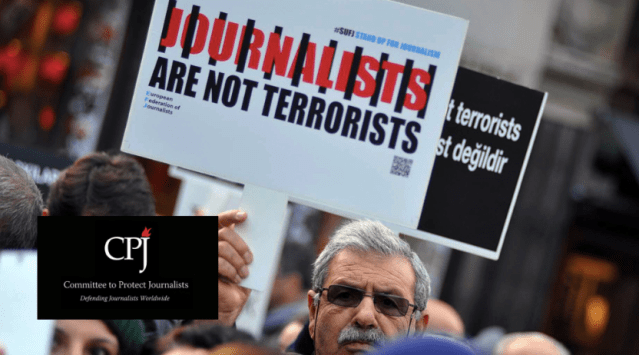
In Turkey, staunch identity politics and the pervasive necessity to preserve the image of the Turk causes great self censorship. As articulated in an article in this article in the Atlantic, Turkey’s president, “regularly vilifies journalists as ‘terrorists’ while stoking fears of terrorism among his voters. He frequently eschews facts and voices conspiracy theories, including the idea that Turkey’s allies are secretly working to undermine the country’s supposed economic might.” Calling journalists “terrorists” speaks to the great power that journalists hold, if they choose to report without self-censorship. Ranked 157th out of 180 countries on the 2018 World Press Freedom Index, one main reason for self-censorship occurs out of fear of insulting “Turkishness” that would inevitably end in legal terms. Turkey’s strong hold over the media and journalism furthers my point that journalism is used to uphold systems of democracy. Freedom of information leads to an educated society and allows for citizens to question their government. If insulting Turkishness is a crime, there is no room to question the governmental institutions and systems that in place in Turkey, something that would be catalyzed by a freedom of press.
 Media and Politics in Turkey