Brief History
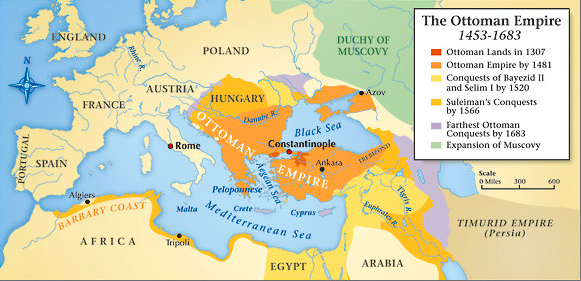
What is now known as the Republic of Turkey was ruled by the Ottoman Empire from the late thirteenth century into the early twentieth century. The Ottomans captured Constantinople, which is now Istanbul, in 1453. During World War I the Ottoman Empire was on the decline. They joined the war effort with the Allied Powers and were defeated in 1918.
The Turkish National Liberation War worked to rebuild Turkey after the Empire fell. The War was won by the Turkish military and ended with the signing of the Lausanne Peace Treaty. This was considered a great diplomatic success and was signed by Great Britain, France, Greece, and Italy. This treaty created the borders of Turkey and the Republic of Turkey was created on October 29, 1923.
Introduction and Geography
Turkey functions as both a bridge and barrier between Europe and Asia. Turkey is located in the Middle East, but it borders these two geographic regions. Turkey’s location is important to its history and culture; throughout its history, there is a constant push-pull of Turkey’s identity due to its geographic location. For example, Turkish government officials have been discussing the ramifications if Turkey were to be added to the European Union.
Metrically, Turkey is the largest territory and population in the Middle East and is larger than any country in Europe. The population is 81,257,239 as of July 2018 and the area of the country is 302,535 square miles. Turkey’s coastlines are along the Black Sea, the Aegean, and the Mediterranean with control over the Turkish straits. This position makes has highly impacted its relationship with Greece.
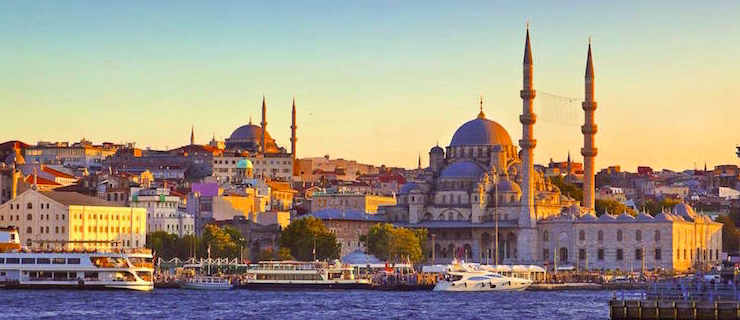
The capital of Turkey is Istanbul and it is the country’s most populated city. The second most populated city is the country’s capital, Ankara. Istanbul has approximately 9 million inhabitants (Source) and is the country’s main commercial center and chief port. Turkey’s population is urbanized with 75.1% of the total population living in an urban setting as of 2018. 20% of the population lives in Istanbul. Istanbul was the capital of both the Byzantine and Ottoman Empire and thus has great historical significance for the country and is relevant in shaping the identity of this quasi-European country.
Society and Culture
Throughout its history, and especially after the Republic of Turkey was established in 1923, Turkey has worked to create a strong identity for the modern Turkish people. The official language is Turkish, which is therefore the most popular language, followed by Kurdish, and then Arabic. It is cited in the Turkish Constitution that citizens of the Republic of Turkey, hold the identity of a Turk, no matter ethnicity or original birth place.
Secularism in Turkey
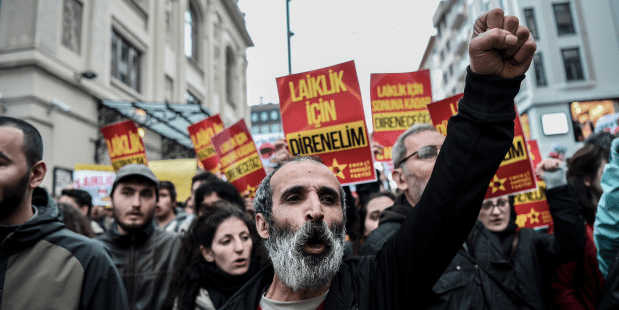
Turkey is declared a secular country, citing that secularism is a keystone to the success of their society. However, 90% of the population identifies as Muslim. Turkey’s modern history is fraught with attempts to secularize the country but is met with constant push-back from the people who desire to express their religion. A consistent point of debate in Turkey are the limitations in place that seek to maintain secularism, despite the religious affiliations of the population. This debate is divides political parties and is ever-changing.
Turkey’s secularism works to limit religious expressions on the grounds of encouraging democracy. One example of this encouragement are the headscarf reforms. Turkey has implemented different laws to control the wearing of headscarves in public in attempts to quell outright expressions of religion. In various institutions throughout Turkey’s history, it has been illegal for women to wear headscarves. (Read more about the headscarf bans throughout Turkey’s history here.)
To understand Turkey’s on going struggle to enforce secularism in a predominantly Islamic country, one must understand Turkey’s histroy, borders, and population. Due to it’s location, Turkey draws inspiration for its metropolitan, democratic cities from Europe. During the creation of the constitution for the new Republic of Turkey in 1923, reforms were put in place to eradicate relgious demonstrations and these reforms carry on today.
I look forward to examining the ideological connection between secularism and democracy and tracing how ideas that carried over from the Ottoman Empire function in today’s society. Throughout this blog, I will turn to Turkey’s history and relationship with Europe to understand this fundamental ideological clash within Turkey’s society.
Sources
 Media and Politics in Turkey